CONFIDENCE IN WATER SAFETY STARTS HERE

Your child's safety is our number one priority!
GENTLE, SAFE, EFFECTIVE, INDIVIDUALIZED LESSONS TO HELP EACH CHILD REACH THEIR MAXIMUM POTENTIAL

One-on-One Survival Swim Instruction

Every child is unique. Our individualized, private ISR lessons are tailored to your child's unique needs, pace, and personality. We provide focused attention on your child, helping them learn self-rescue skills step-by-step while building confidence as they go!

Skill-Advancement for Returning Students

Children grow and develop rapidly during early childhood, and their swim skills need to adjust as they grow. These lessons are shorter sessions, designed for students who have already completed ISR lessons and need to keep their skills fresh and improve on new additional skills. These classes reinforce their survival skills, adjust for growth and changes in their proportions, and keep your little one confident and capable in the water year after year.
Maintenance Lessons

Maintenance lessons provide continued practice for children following their initial ISR lessons. Regularly scheduled weekly or even monthly lessons help keep your child's skills fresh while supporting long-term confidence and safety. Contact us to see what maintenance schedule makes sense for your little one!

FAQs
Can’t babies swim naturally?
Unfortunately, babies cannot naturally swim. If this were the case, there wouldn’t be so many drownings every year. According to the Center for Disease Control and Accident Prevention, drowning is the leading cause of accidental death for children ages 1-4 in the United States.
How is it that babies can learn to respond to the danger of water when they fall in?
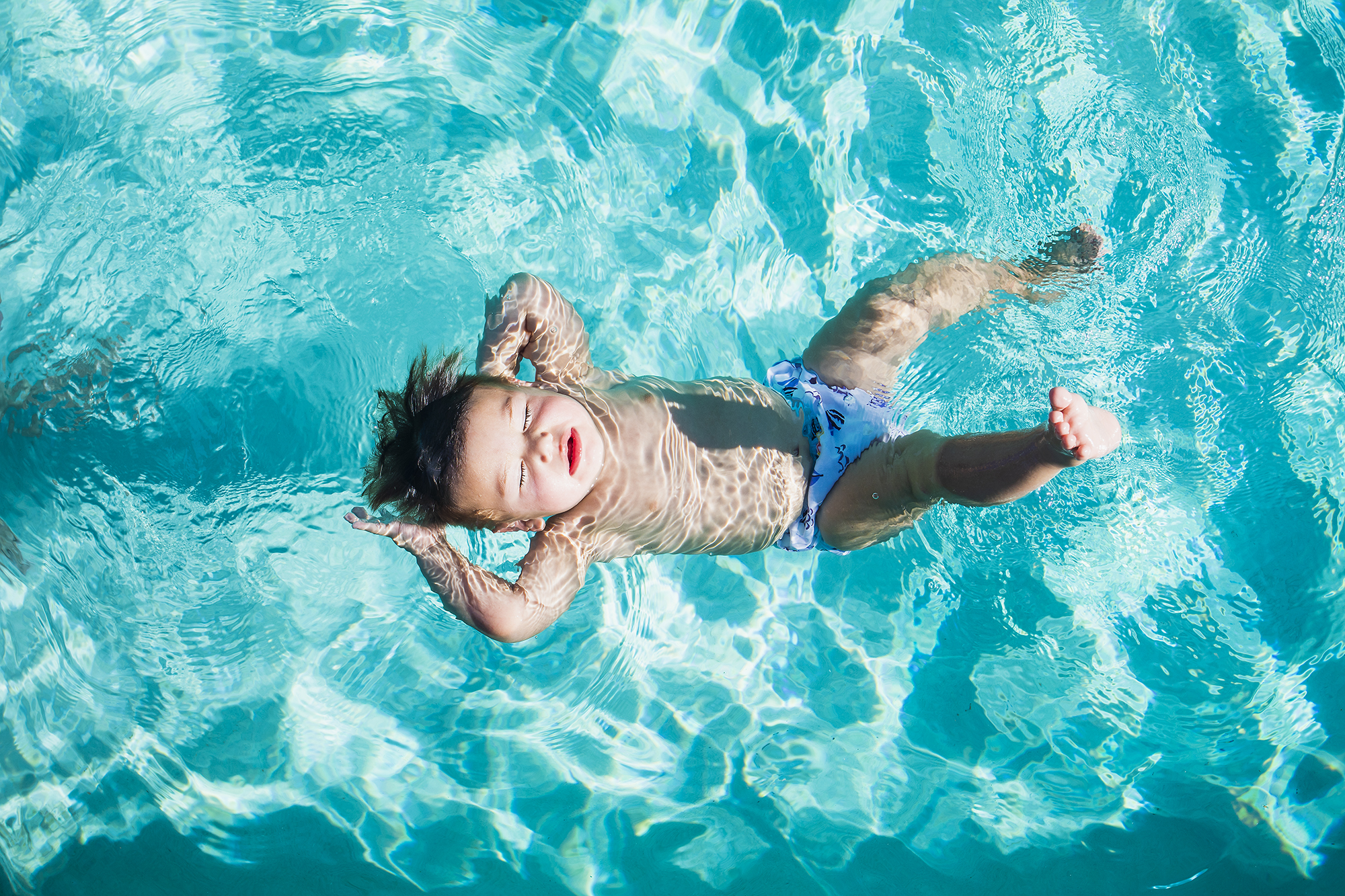
A baby does not need to perceive danger or be afraid to respond appropriately to being underwater. If a baby has learned to roll over and float when he needs air, he doesn't need to perceive danger in order to respond in this manner. He needs skill, practice and confidence to calmly deal with the situation.
How do you teach them to hold their breath?
Breath holding skills are taught beginning with the first lesson. We shape breath control using highly effective positive reinforcement techniques. We continue to reinforce these breath-holding techniques throughout every lesson.
How can you teach babies and young children to swim?
ISR instructors teach infants to swim by honoring each child's individual strengths and experiences. They understand the fundamentals of the behavioral sciences, child development and of sensori-motor learning as it relates to the acquisition of aquatic survival skills; they use this education to guide each child through the sequence of learning to swim and float.

Get in Touch

We would love to hear from you.